Building Stronger Foundations: Addressing the Mental Health Crisis in Construction
By Dr. Sally Spencer-Thomas, Founder of Construction Working Minds, Psychologist, Keynote Speaker, Trainer and Impact Entrepreneur; and Wendy Martinez Farmer, Vice President of 988 Strategy, Quality Improvement and Clinical Standards at Vibrant Emotional Health
The construction industry builds the infrastructure that powers our communities. Yet behind this vital work lies a devastating paradox: The very workers who construct our foundations are facing a mental health crisis that threatens to undermine their own.
In construction, people are trained to spot hazards before someone gets hurt. But what happens when the danger isn’t visible? A mental health emergency is any situation where a person’s thoughts, feelings, or behaviors put them or others at risk of harm. It can look like panic attacks, despair, risky substance use, rage, or numb withdrawal.
Even so, these warning signs are often hidden behind perceived values like stoicism and toughness. Many workers power through emotional pain until it’s too late. Mental health crises aren’t always personal, either; they can stem from being overwhelmed by others’ struggles or witnessing trauma on the job. Even the strongest people can reach an emotional breaking point and need immediate support.
Beyond Physical Safety: Mental Health Challenges in Construction
While the industry has made significant progress in physical safety, mental health remains one of its greatest risks. Physical injuries receive attention, but mental injuries often occur quietly, on and off the jobsite. These invisible injuries drain focus, decision-making, and teamwork, threatening both safety and productivity.
Recent data shows that mental health challenges in construction are climbing. Approximately one in six construction workers (15.4%) report anxiety or depression – up 28% for anxiety and 46% for depression from 2018-2024 (CPWR, 2025).

More tragically, suicide and overdose deaths far outnumber jobsite fatalities. While about 1,000 workers die from physical injuries each year, six times as many die by suicide (CDC, 2024), and an estimated 17,000 die from overdose (CPWR, 2024).
According to the latest data, construction accounted for one in five (nearly 18%) of all suicides among working individuals in 2021, despite representing only 7.5% of the overall workforce (CPWR, 2024). The suicide rate for male construction workers was 56.0 per 100,000, compared with 32.0 across all industries, and for female workers, it was 10.4 per 100,000 (Sussell et al., 2023).
Construction also has the highest overdose death rate of any U.S. industry (CPWR, 2025). These rates are even higher when broken down by specific construction trades.
That’s a huge disproportionality – a sign that this is a systemic issue within one of America’s most essential industries.
| Men’s Suicide Rates by Construction Trade or Service Branch (per 100,000) (Sussell et al, 2023; Department of Defense, 2023) | |
| Group / Occupation (Ranked Highest to Lowest) | Suicide Rate (per 100,000) |
| Construction Laborers | 91.0 |
| Structural Iron & Steel Workers | 86.1 |
| Roofers | 79.9 |
| Millwrights | 73.2 |
| Carpenters | 69.4 |
| First-Line Supervisors of Construction Trades & Extraction Workers | 61.7 |
| U.S. Army (Active Component) | 28.9 |
| U.S. Marine Corps (Active Component) | 22.7 |
| U.S. Navy (Active Component) | 21.5 |
| U.S. Air Force (Active Component) | 17.3 |
| Law Enforcement Officers (Male) | 29.7 |

The Perfect Storm: Understanding Risk Factors
Construction presents a convergence of stressors that make workers particularly vulnerable:
- Physical and environmental stressors: Physically demanding tasks, long hours, and exposure to hazards or harsh weather create chronic pain, fatigue, and stress.
- Economic instability: Seasonal work leads to financial strain, job insecurity, and barriers to care. From 2018-2024, the number of workers who couldn’t afford mental health care rose almost 140% (CPWR, 2025).
- Gender-based barriers: In a male-dominated industry, a culture of self-reliance and stigma keeps many from seeking help – only 4.8% of construction workers saw a mental health professional in the past year (Center for Construction Research, 2024).
- Workplace isolation: Frequent job site changes limit connection, and fear of appearing weak discourages honesty about struggles.
- Harmful coping mechanisms: Elevated rates of heavy drinking and opioid use compound the crisis. A study found that 16.5% of construction workers reported heavy drinking – defined for men as consuming 15 or more drinks per week – in the previous month (Bush & Lipari, 2015). About 10% of construction workers use prescription opioids annually; injured workers are four times as likely to do so (CPWR, 2022). Problem gambling is another overlooked addiction fueled by financial instability (Binde, 2020).
- Lack of recognition: Unlike military or first responders, construction workers’ sacrifices often go unnoticed, deepening shame and discouraging help-seeking.
- Trade-specific vulnerabilities: Different trades face unique stressors. Ironworkers, for example, experience high rates of trauma exposure and mental strain due to job danger.
Blueprint for Wellness: Coping Strategies and Support Systems
When mental health declines, early signs often appear at work: changes in focus, attendance, or mood that may be misinterpreted as performance issues.
That’s why manager training is essential. Supervisors are the front line of care, and the best leaders prepare before a crisis hits. They ensure their company’s mental health resources are accessible and current, not buried in an HR binder.
When managers respond quickly and confidently, they become bridges between distress and recovery. But they can’t do it alone. That’s where peer support comes in – an essential link that turns awareness into action.

Proven Strategies to Support Mental Health
- Recognize warning signs: Changes in behavior, substance use, withdrawal, hopelessness, or talk of suicide signal distress.
- Create psychologically safe workplaces: Mental health must be protected as deliberately as physical safety. This means offering Employee Assistance Programs (EAPs), posting 988 Suicide & Crisis Lifeline information, normalizing help-seeking, and integrating mental health into safety protocols. Programs like the Construction Working Minds Advanced Skills for Managers Training equip leaders to respond with compassion and confidence, while auditing their company’s mental health resources for accessibility and credibility.
- Peer support and training: Programs such as VitalCog in Construction, safeTALK, and Applied Suicide Intervention Skills Training (ASIST) build awareness and confidence to intervene. The United Suicide Survivors International (USSI) Workplace Suicide Prevention Toolkit provides employers, unions, and trade groups with ready-to-use resources, and they hold an Annual Construction Mental Health & Wellbeing Conference.
- Address financial stress: Offering stable employment, strong benefits, financial counseling, and off-season job opportunities can alleviate major contributors to distress. Leading firms, including Gilbane, Hensel Phelps, JE Dunn, Encore Electric, and Allan Myers, have made these strategies part of their long-term culture change.
The 988 Lifeline: A Life-saving Resource for Construction Professionals
The 988 Suicide & Crisis Lifeline offers 24/7 call, text and online chat support for anyone experiencing a suicidal, substance misuse, or mental health crises, or any other kind of emotional distress – similar to 911 for physical emergencies. Individuals can call for themselves or on behalf of someone they are concerned about, such as one of their colleagues or direct reports.
With a network of over 200 crisis contact centers across the U.S. and its territories, help seekers will be routed to their nearest crisis contact center, or when applicable, specialized services such as the Veterans Crisis Line (988, Press 1) or 988 Lifeline Spanish (988, Press 2). From there, they will be connected with skilled, caring crisis counselors for crisis intervention, emotional support, and, when needed, creating a safety plan using local mental health resources like mobile crisis teams, community crisis stabilization centers, and even family and friends.
The 988 Lifeline can not only provide immediate de-escalation but also connections to further support. In fact, a recent study found that the vast majority of people who contacted 988 said it helped them when they needed it most, making it a critical resource that construction professionals should utilize and promote.
Building Hope, One Worker at a Time
The data is undeniable: construction faces a mental health emergency that rivals its physical safety risks. High rates of anxiety, depression, addiction, suicide, and overdose show that too many workers are struggling in silence.
The industry has proven its ability to innovate and protect its people, dramatically improving physical safety over the past decades. Now it’s time to apply that same determination to mental health.
Awareness efforts like Construction Suicide Prevention Week have moved the conversation forward, but awareness alone doesn’t save lives. What’s needed is sustained, year-round action.
Every construction professional has the power to help build a culture where reaching out for help is a sign of strength, and no one has to white-knuckle through pain alone. The people who build our communities deserve workplaces that protect their mental health as diligently as their physical safety.
If you or someone you know is struggling with mental health challenges, emotional distress, substance misuse, or just needs to talk, call or text 988, or chat at 988lifeline.org 24/7.
About Vibrant Emotional Health
Vibrant Emotional Health is a nonprofit organization that helps individuals and families achieve emotional well-being. For more than 55 years, Vibrant has delivered innovative programs and high-quality services that meet people where they are – when, where, and how they need support. As the administrator of the 988 Suicide & Crisis Lifeline, Disaster Distress Helpline, and NFL Life Line, Vibrant ensures that anyone in emotional distress has access to care. Through community programs, advocacy, and education, Vibrant is advancing emotional well-being for all. Visit vibrant.org. Follow Vibrant on X, LinkedIn, Facebook, and Instagram.
About Construction Working Minds
Since 2014, Construction Working Minds has been a leading program founded and led by Dr. Sally Spencer-Thomas, dedicated to advancing mental health promotion, suicide prevention, and addiction recovery in the construction industry. The initiative offers a full continuum of support – from general awareness sessions and skill-building trainings to strategic consultation, implementation support, and burnout mitigation retreats. Construction Working Minds also develops practical tools that make mental health approachable and actionable on every job site, including microlearning videos, Toolbox Talks in multiple languages, and customizable resources for companies of all sizes. Through these efforts, the program helps industry leaders build safer, healthier, and more resilient workplaces where every worker knows their mental health matters and where support is always within reach. Visit constructionworkingminds.org or contact Dr. Sally Spencer-Thomas at 720-244-6535 or SallySpencerThomas@gmail.com.
About the Authors:
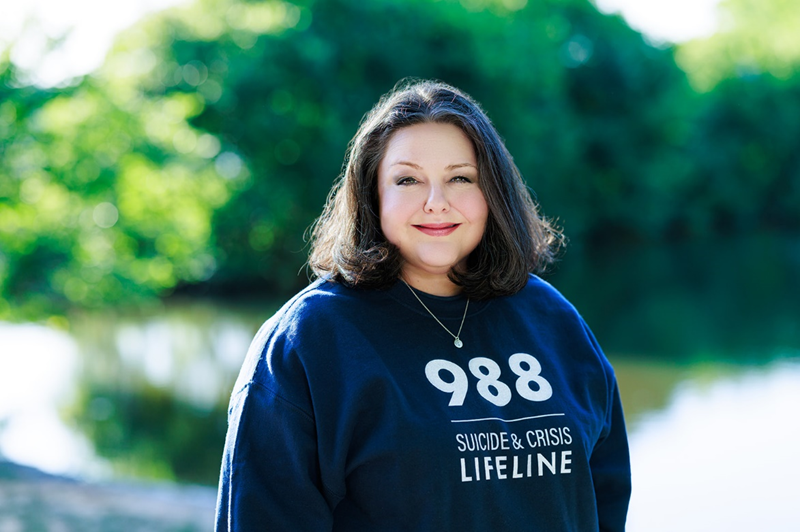
Wendy Martinez Farmer, LPC, MBA, is the Vice President of Strategy, Quality Improvement and Clinical Standards at Vibrant Emotional Health, the nonprofit administrator of the 988 Suicide & Crisis Lifeline. A Licensed Professional Counselor with more than two decades of experience in crisis care and behavioral health, Wendy has held leadership roles across both the public and private sectors. She has been instrumental in shaping national standards for crisis systems and leading the development of real-time electronic crisis care coordination in states such as Georgia, New Hampshire, and Massachusetts. Wendy’s work continues to guide and strengthen crisis response systems nationwide, with a focus on expanding access to timely, effective, and compassionate support.

A clinical psychologist and impact entrepreneur, Dr. Spencer-Thomas entered suicide prevention after losing her brother Carson to suicide. She is nationally and internationally recognized for her leadership in closing gaps in mental health promotion and suicide prevention, especially in high-risk industries like construction. She is the lead author of the National Guidelines for Workplace Suicide Prevention, co-founder of the Construction Working Minds initiative, and a founding partner in the innovative Man Therapy campaign. Dr. Spencer-Thomas has keynoted internationally, including at Australia’s MATES in Construction Conference, and was invited to speak at the White House on men’s mental health. In 2016, she accepted IRMI’s Horizon Award on behalf of the National Action Alliance’s Workplace Task Force, and in 2021 she was named one of ENR’s Top 25 Newsmakers in Construction. www.SallySpencerThomas.com
References:
- Binde, P., & Romild, U. (2020). Risk of problem gambling among occupational groups: A population and registry study. Nordisk Alkohol & Narkotika, 37(3), 262–278. https://doi.org/10.1177/1455072519899779
- U.S. Bureau of Labor Statistics. (2024). National census of fatal occupational injuries, 2022 (News Release USDL-24-1234). U.S. Department of Labor. https://www.bls.gov/news.release/cfoi.htm
- Bush, D. M., & Lipari, R. N. (2015, April 16). Substance use and substance use disorder by industry. In The CBHSQ Report. Substance Abuse and Mental Health Services Administration. https://www.ncbi.nlm.nih.gov/books/NBK343542/
- CPWR – The Center for Construction Research and Training. (2022, January 1). Key findings from research: Identifying opioid use among construction workers. https://stacks.cdc.gov/view/cdc/212963
- CPWR – The Center for Construction Research and Training. (2024). Suicide and mental health among construction workers: Data Bulletin. https://www.cpwr.com/research/data-center/the-construction-chart-book/interactive-7th/injuries-illnesses-health/mental-health/
- CPWR – The Center for Construction Research and Training. (2025, September 13). New data on mental health among construction workers & other CPWR resources [PDF]. https://www.cpwr.com/wp-content/uploads/New-Data-on-Mental-Health-among-Construction-Workers.pdf
- CPWR – The Center for Construction Research and Training. (2025). Health risk factors in construction [Dashboard]. https://www.cpwr.com/research/data-center/the-construction-chart-book/interactive-7th/injuries-illnesses-health/health-risk-factors/
- CPWR – The Center for Construction Research and Training. (n.d.). Resources to prevent opioid deaths in construction. https://www.cpwr.com/research/research-to-practice-r2p/r2p-library/other-resources-for-stakeholders/mental-health-addiction/opioid-resources/
- Center for Construction Research and Training (2024). Mental Health Data Dashboard.
- Centers for Disease Control and Prevention. (2024). Suicide mortality data: 2022 provisional data release. National Center for Health Statistics. https://www.cdc.gov/nchs/nvss
- Department of Defense. (2023). Annual Report on Suicide in the Military CY 2022. https://www.dspo.mil/Portals/113/Documents/ARSM_CY22.pdf
- Kaiser Family Foundation. (2024, June 18). Public awareness of the 988 Suicide and Crisis Lifeline: KFF health tracking poll. https://www.kff.org
- Substance Abuse and Mental Health Services Administration. (2025, June). 988 performance metrics: National data dashboard. U.S. Department of Health and Human Services. https://www.samhsa.gov/find-help/988/performance-metrics
- Substance Abuse and Mental Health Services Administration. (2023). 988 Suicide and Crisis Lifeline overview. U.S. Department of Health and Human Services. https://988lifeline.org
- Sussell, A., Peterson, C., Li, J., Miniño, A., Scott, K. A., & Stone, D. M. (2023). Suicide rates by industry and occupation – National Vital Statistics System, United States, 2021. MMWR Morbidity and Mortality Weekly Report, 72(50), 1346–1350. https://www.cdc.gov/mmwr/volumes/72/wr/mm7250a2.htm
- Trueblood, A. B., Rodman, C., Brooks, R. D., Harris, W., Bunting, J., Roelofs, C., & Rinehart, R. (2024, September). Mental health trends in the construction industry: A look at anxiety, depression, psychological distress, suicides, and overdoses (Data Bulletin). CPWR – The Center for Construction Research and Training. https://www.cpwr.com/wp-content/uploads/DataBulletin-September2024.pdf
- U.S. Bureau of Labor Statistics. (2021). Labor force characteristics by race and ethnicity, 2020 (Report 1105). U.S. Department of Labor. https://www.bls.gov/opub/reports/race-and-ethnicity/2020/home.htm
- U.S. Department of Health and Human Services. (2024, May). 988 Suicide and Crisis Lifeline: State performance data report. https://www.hhs.gov
- U.S. Department of Veterans Affairs. (2024, April 15). Building America: Stepping into a career in construction. U.S. Department of Veterans Affairs. https://news.va.gov/138272/building-america-stepping-career-construction