De-Risking Large U.S. Capital Projects Through Integrated Delivery
Kevin Batche, Vice President of Procurement & Logistics, IPS-Integrated Project Services, LLC
Practical strategies to improve schedule certainty, cost control, and operational readiness.
Large U.S. capital projects are increasingly missing schedule, cost, and startup targets, not due to a lack of technical capability, but because execution remains fragmented across engineering, procurement, logistics, construction, and operations.
Rising supply-chain volatility, labor constraints, tariff uncertainty, and long-lead equipment delays have made this fragmentation more costly than ever. Traditional delivery models, where functions operate sequentially and independently, are no longer sufficient. High-performing projects are shifting toward integrated delivery approaches, aligning critical functions earlier in the lifecycle to improve decision-making, reduce risk, and enhance execution certainty. This article outlines five practical strategies owners can adopt to drive better outcomes.
High-performing projects are shifting toward integrated delivery approaches, aligning critical functions earlier in the lifecycle to improve decision-making, reduce risk, and enhance execution certainty. This article outlines five practical strategies owners can adopt to drive better outcomes.

Why Many Projects Fall Behind
Today’s capital projects are being executed in an environment defined by material shortages, constrained labor markets, freight instability, and global supply-chain disruption. At the same time, expectations for faster delivery and tighter budgets continue to increase.
Projects that fall behind are rarely those with weak engineering or construction capability. More often, they fail because critical functions operate in isolation for too long.
- Procurement decisions are made without construction input
- Logistics planning begins only after equipment delays occur
- Startup and commissioning planning is deferred until late stages
These disconnects create compounding risks that ultimately manifest as schedule delays, cost overruns, and startup challenges.
The issue is not functional capability; it is timing and integration.
The Shift: From Siloed Execution to Integrated Delivery
Traditional project delivery models separate engineering, procurement, construction, and operations into distinct phases with limited early coordination. This approach introduces risk at every handoff.
Leading projects are moving toward integrated delivery, where key disciplines align early around:
- Critical path drivers
- Supply-chain constraints
- Construction sequencing
- Operational readiness requirements
This shift enables better decisions earlier—when they are least expensive and most impactful.

Five Strategies to Reduce Execution Risk
1. Elevate Procurement to a Project-Control Function
Procurement timing has become a primary driver of project schedules. Long-lead equipment often defines the critical path, yet procurement is still frequently initiated too late.
Owners should require project teams to:
- Identify critical equipment during conceptual design
- Align sourcing strategies with construction sequencing and startup priorities
- Treat procurement milestones as core schedule drivers
Supplier selection must also evolve. In today’s market, factors such as backlog, labor stability, fabrication capacity, and delivery reliability are often more important than incremental cost savings.
2. Actively Manage Critical Supplier Execution
Monthly status updates are no longer sufficient for high-risk equipment packages.
- Owners should implement:
- Milestone-based fabrication tracking
- Proactive expediting programs
- Early visibility into production progress and constraints
Small delays at the fabrication level can quickly cascade into construction resequencing, increased labor costs, and compressed commissioning windows. Active oversight reduces the likelihood of late-stage surprises.
3. Integrate Logistics Into Early Planning
Logistics is no longer a downstream activity—it is a critical component of project execution.
Transportation constraints directly impact installation sequencing, site productivity, and overall schedule performance. Owners should ensure early validation of:
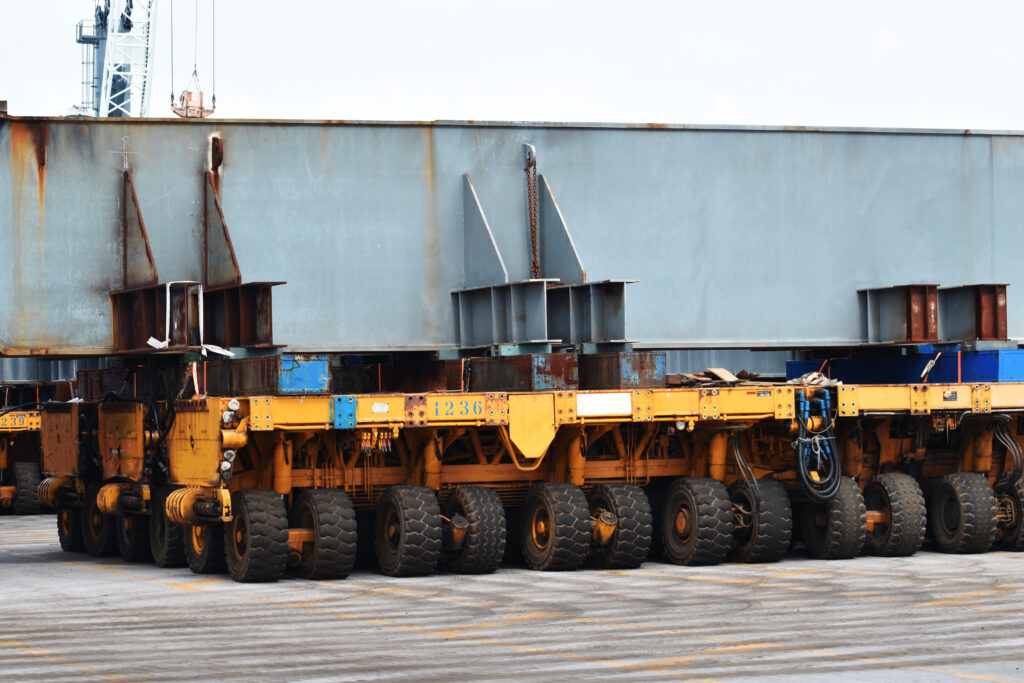
- Heavy-haul routes and permitting requirements
- Crane access and lift planning
- Site laydown and material handling strategies
- Preservation and storage needs
- Customs and tariff exposure
Integrating logistics early prevents avoidable delays and improves field efficiency.
4. Align Construction and Operational Readiness Early
Mechanical completion does not guarantee successful startup. Late-stage challenges often arise from misalignment between construction, commissioning, and operations teams.
High-performing projects address this by developing integrated turnover and startup strategies early, including:
- Structured system completion planning
- Documentation readiness and turnover sequencing
- Operator training and staffing alignment
- Commissioning coordination across disciplines
Early alignment ensures a smoother transition from construction to operations and reduces startup risk.
5. Improve Cost Certainty Through Real-Time Market Intelligence
Traditional estimating approaches struggle to account for current market volatility, particularly in labor, materials, freight, and tariffs.
To improve cost certainty, owners should supplement historical data with:
- Real-time supplier engagement
- Budgetary quotations during early phases
- Freight and logistics cost analysis
- Market-capacity assessments
This approach enables more accurate forecasting and reduces exposure to late-stage cost escalation.
The Core Lesson
- The most successful projects are not simply executing faster;identify risks earlier and coordinateordinating decisions across disciplines before those risks materialize.
- Integrated delivery is not a structural change alone; it is a shift in how and when decisions are made.
Conclusion
De-risking large capital projects now requires more than optimizing individual workstreams. It requires early, deliberate integration across engineering, procurement, logistics, construction, commissioning, and operations.
Owners who adopt this approach are achieving stronger schedule performance, greater cost certainty, and more reliable startups. Those who continue to rely on traditional, siloed execution models will increasingly face avoidable delays, cost pressures, and operational challenges.
In today’s environment, integration is no longer an advantage; it is a requirement for successful project delivery.

Kevin Batche is Vice President of Procurement & Logistics at IPS-Integrated Project Services, LLC, where he leads procurement strategy, global sourcing, logistics oversight, and supply-chain risk management for complex capital construction projects. He also serves as Co-Leader of the Procurement & Contracting Sprint Team for the Construction Users Roundtable (CURT). With extensive experience supporting large-scale industrial and manufacturing programs, Kevin specializes in procurement planning, supplier oversight, fabrication expediting, logistics strategy, and integrated project delivery. He works closely with project teams and owners to help navigate the commercial, supply chain, and execution challenges shaping today’s capital project environment.