AI’s Hidden Bottleneck: Why the Next Tech Boom Depends on Builders
By Chris Callen, Founder & CEO, PLOT
Artificial intelligence dominates headlines, investment cycles, and boardroom discussions. But beneath the hype around new models and chip breakthroughs lies a simple truth: AI cannot scale faster than we can build the physical world that supports it.
For all the talk about graphics processing units (GPUs), model parameters, and billion-dollar rounds, AI still lives in the real world. Models run on servers. Servers live in data halls. Those data halls depend on power, cooling, concrete, steel, and skilled labor to exist at all.
The United States hosts nearly half of the world’s data centers, more than the next 10 countries combined, but we’re hitting limits that software alone can’t solve. Data-center power demand is projected to rise by more than 130% this decade. Some AI campuses are planning multi-gigawatt loads that exceed the energy use of entire cities. Key electrical equipment can take 18 to 36 months to procure. Mechanical, electrical, and low-voltage talent is stretched thin.
The bottleneck in AI isn’t the algorithm anymore. It’s the build-out. And that makes construction central to America’s next competitive advantage.
The Physical Scale of AI
Across the country, developers are announcing AI-focused campuses that span hundreds of acres and carry price tags in the tens of billions. These aren’t “tech projects” in the Silicon Valley sense, they’re long-term infrastructure programs with everything that implies.
A modern hyperscale site may see 100 to 200 deliveries a day. Dozens of subcontractors work simultaneously within tight security and access routes where a single blocked gate can halt progress. Commissioning runs around the clock. Skilled labor is coordinated like a military operation.
When any one piece slips, power gear, deliveries, workforce, inspections, the entire schedule moves. The critical path doesn’t just run through design approval anymore. It runs through coordination capacity.


The New National Bottlenecks
- Power availability. The grid is the new gating factor. Utilities can’t move fast enough to meet multi-gigawatt load requests. New substations, transformers, and transmission lines require lengthy approvals and multi-year build cycles. Every megawatt of delay reverberates through the national AI build-out.
- Construction throughput. Owners and contractors can build almost anything, just not everything at once. The density and concurrency of these projects push beyond what traditional coordination methods can handle. Scattered spreadsheets and text threads aren’t enough when a single missed delivery or crew overlap can cost weeks.
- Supply chain constraints. Switchgear, generators, chillers, and advanced cooling systems now dictate project pace. Domestic manufacturing can’t match global demand, and a 60-day delay in one component can ripple across billions in construction value.
- Workforce limitations. The electricians wiring AI campuses today are the same ones building hospitals, fabs, and manufacturing plants. There simply aren’t enough of them. Without serious investment in apprenticeship and upskilling programs, we’ll have funded projects with no hands to build them.
- Community and regulatory pressure. AI campuses face growing scrutiny over water use, power costs, and land impact. Developers need to engage early and often. Community trust is earned with transparency, not press releases.
The Global Context
While the U.S. wrestles with power queues and workforce shortages, other nations are aligning policy, energy, and construction in lockstep. China has set national targets for AI adoption and is rapidly adding power and compute capacity. Europe is pairing data-center growth with aggressive carbon-reduction standards and faster grid-connection reforms. America doesn’t need to mirror those systems, but we can’t ignore that global competition now includes how fast you can build, not just how well you can code.
A National Moment for Builders
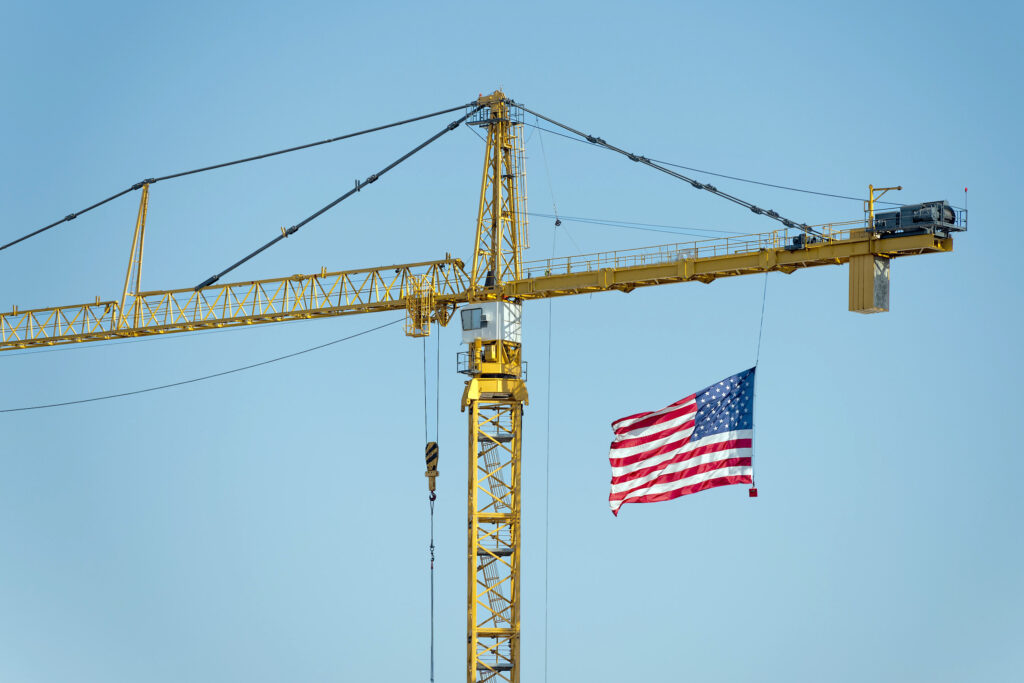
If AI is the brain of the future economy, construction is the circulatory system that keeps it alive. The next decade of AI leadership depends on the people who pour footings, pull wire, and coordinate deliveries. That means several shifts are overdue:
- Modernize coordination. Real-time visibility of labor, materials, and logistics is non-negotiable. Siloed tools create hidden risk and wasted capacity.
- Plan for power early. Utilities, owners, and contractors must collaborate in pre-design, not after groundbreaking. Every month saved in early alignment prevents years of downstream delay.
- Invest in workforce pipelines. Expand apprenticeships and technical training, especially for electrical and mechanical trades. The talent gap is the new project killer.
- Strengthen supply chains. Long-range procurement, domestic partnerships, and diversified vendor bases can prevent costly idle time.
- Build community trust. These projects reshape regions. Communication about water, energy, and incentives isn’t a side task – it’s part of the scope.
The Path Forward
AI will not be limited by imagination. It will be limited by execution.
The United States has the builders, ingenuity, and experience to lead the world, but only if we expand the conversation beyond chips and models. AI is not just a technology story. It’s an infrastructure story. It’s a workforce story. It’s a construction story.
Every superintendent managing deliveries, every subcontractor fabricating steel, every engineer designing cooling systems is shaping the future of computing.
The Next Chapter of the AI Economy Belongs to the Builders.
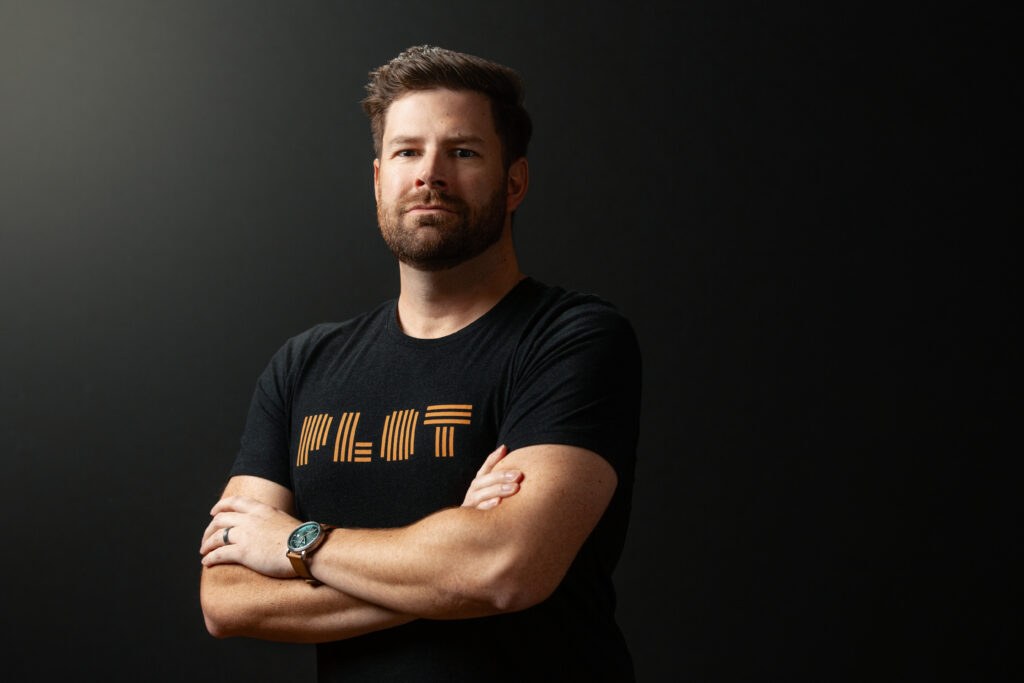
Chris Callen is the Founder and CEO of PLOT, a construction-technology company built by and for builders. A former second-generation trade contractor who spent years running his family’s concrete construction company, Callen now focuses on solving the practical coordination problems that slow down today’s largest projects: hospitals, manufacturing plants, and the hyperscale data centers powering the AI economy. Known for a straightforward, field-driven approach to tech, he works with some of the nation’s largest general contractors to streamline procurement and jobsite logistics.
PLOT provides simple, jobsite-ready tools that help general contractors manage material procurement and delivery coordination on complex builds. From multimillion-square-foot data centers to mission-critical healthcare projects, PLOT’s software replaces messy spreadsheets and ad-hoc communication with predictable scheduling, real-time delivery visibility, and fewer costly delays. Today, PLOT is used by some of the largest contractors in the United States, supporting teams delivering the infrastructure that makes advanced computing possible.